Pages

Saturday, 7 January 2012

Jagdish Chandra Bose

0 comments Saturday, 7 January 2012 |

Jagdish Chandra Bose

Born: November 30, 1858
Died: November 23, 1937
Achievements: He was the first to prove that plants too have feelings. He invented wireless telegraphy a year before Marconi patented his invention.

Jagdish Chandra Bose was an eminent Indian scientist. He was the first to prove that plants and metals too have feelings.

Jagdish Chandra Bose was born on November 30, 1858 in Mymensingh (now in Bangladesh). His father Bhagabanchandra Bose was a Deputy Magistrate. Jagadish Chandra Bose had his early education in village school in Bengal medium. In 1869, Jagadish Chandra Bose was sent to Calcutta to learn English and was educated at St.Xavier's School and College. He was a brilliant student. He passed the B.A. in physical sciences in 1879.

In 1880, Jagdishchandra Bose went to England. He studied medicine at London University, England, for a year but gave it up because of his own ill health. Within a year he moved to Cambridge to take up a scholarship to study Natural Science at Christ's College Cambridge. In 1885, he returned from abroad with a B.Sc. degree and Natural Science Tripos (a special course of study at Cambridge).

After his return Jagadish Chandra Bose, was offered lectureship at Presidency College, Calcutta on a salary half that of his English colleagues. He accepted the job but refused to draw his salary in protest. After three years the college ultimately conceded his demand and Jagdish Chandra Bose was paid full salary from the date he joined the college. As a teacher Jagdish Chandra Bose was very popular and engaged the interest of his students by making extensive use of scientific demonstrations. Many of his students at the Presidency College were destined to become famous in their own right. These included Satyendra Nath Bose and Meghnad Saha.

In 1894, Jagadish Chandra Bose decided to devote himself to pure research. He converted a small enclosure adjoining a bathroom in the Presidency College into a laboratory. He carried out experiments involving refraction, diffraction and polarization. It would not be wrong to call him as the inventor of wireless telegraphy. In 1895, a year before Guglielmo Marconi patented this invention, he had demonstrated its functioning in public.

Jagdish Chandra Bose later switched from physics to the study of metals and then plants. He fabricated a highly sensitive "coherer", the device that detects radio waves. He found that the sensitivity of the coherer decreased when it was used continuously for a long period and it regained its sensitivity when he gave the device some rest. He thus concluded that metals have feelings and memory.

Jagdish Chandra Bose showed experimentally plants too have life. He invented an instrument to record the pulse of plants and connected it to a plant. The plant, with its roots, was carefully picked up and dipped up to its stem in a vessel containing bromide, a poison. The plant's pulse beat, which the instrument recorded as a steady to-and-fro movement like the pendulum of a clock, began to grow unsteady. Soon, the spot vibrated violently and then came to a sudden stop. The plant had died because of poison.

Although Jagdish Chandra Bose did invaluable work in Science, his work was recognized in the country only when the Western world recognized its importance. He founded the Bose Institute at Calcutta, devoted mainly to the study of plants. Today, the Institute carries research on other fields too. 

Jagdish Chandra Bose died on November 23, 1937.

read more

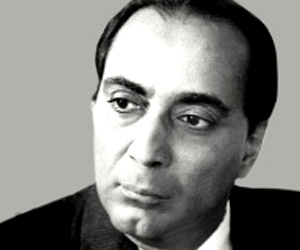
Homi Bhabha

0 comments

Homi Bhabha

Homi Bhabha


Born: October 30, 1909
Died: January 24, 1966
Achievements: Founded Tata Institute of Fundamental Research; was the first chairman of India's Atomic Energy Commission; was chairman of the first United Nations Conference on the Peaceful Uses of Atomic Energy, held in Geneva in 1955.

Homi Bhabha, whose full name was Homi Jehnagir Bhabha, was a famous Indian atomic scientist. In Independent India, Homi Jehnagir Bhabha, with the support of Jawaharlal Nehru, laid the foundation of a scientific establishment and was responsible for the creation of two premier institutions, Tata Institute of Fundamental Research and Bhabha Atomic Research Centre. Homi Bhabha was the first chairman of India's Atomic Energy Commission.

Homi Jehangir Bhabha was born on October 30, 1909, in Bombay in a rich Parsi family. After graduating from Elphinstone College and the Royal Institute of Science in Bombay, he went to Cambridge University. He received his doctorate in 1934. During this period he worked with Niels Bohr on the studies that led to quantum theory. Homi Jehnagir Bhabha also worked with Walter Heitler on the cascade theory of electron showers, which was of great importance for the understanding of cosmic radiation. He did significant work in identifying the meson.

Due to outbreak of Second World War, Homi Jehangir Bhabha, returned to India in 1939. He set up the Cosmic Ray Research Unit at the Indian Institute of Science, Bangalore under C. V. Raman in 1939. With the help of J.R.D. Tata, he established the Tata Institute of Fundamental Research at Mumbai. In 1945, he became director of the Tata Institute of Fundamental Research.

Apart from being a great scientist, Homi Bhabha, was also a skilled administrator. After independence he received the blessings of Jawaharlal Nehru for peaceful development of atomic energy. He established the Atomic Energy Commission of India in 1948. Under his guidance Indian scientists worked on the development of atomic energy, and the first atomic reactor in Asia went into operation at Trombay, near Bombay, in 1956.

Homi Bhabha was chairman of the first United Nations Conference on the Peaceful Uses of Atomic Energy, held in Geneva in 1955. He advocated international control of nuclear energy and the outlawing of atomic bombs by all countries. He wanted nuclear energy to be used for alleviating poverty and misery of people.

Homi Bhabha received many honorary degrees from Indian and foreign universities and was a member of numerous scientific societies, including the National Academy of Sciences in the United States. He also authored many articles on quantum theory and cosmic rays. Homi Bhabha died in an aeroplane crash in Switzerland on January 24, 1966.

read more

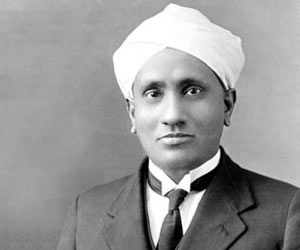
C.V. Raman

0 comments

C.V. Raman

C.V. Raman


Born: November 7, 1888
Died: November 21, 1970

Achievements: He was the first Indian scholar who studied wholly in India received the Nobel Prize. 


C.V. Raman is one of the most renowned scientists produced by India. His full name was Chandrasekhara Venkata Raman. For his pioneering work on scattering of light, C.V. Raman won the Nobel Prize for Physics in 1930. 


Chandrashekhara Venkata Raman was born on November 7, 1888 in Tiruchinapalli, Tamil Nadu. He was the second child of Chandrasekhar Iyer and Parvathi Amma. His father was a lecturer in mathematics and physics, so he had an academic atmosphere at home. He entered Presidency College, Madras, in 1902, and in 1904 passed his B.A. examination, winning the first place and the gold medal in physics. In 1907, C.V. Raman passed his M.A. obtaining the highest distinctions.


During those times there were not many opportunities for scientists in India. Therefore, Raman joined the Indian Finance Department in 1907. After his office hours, he carried out his experimental research in the laboratory of the Indian Association for the Cultivation of Science at Calcutta. He carried out research in acoustics and optics.


In 1917, Raman was offered the position of Sir Taraknath Palit Professorship of Physics at Calcutta University. He stayed there for the next fifteen years. During his tenure there, he received world wide recognition for his work in optics and scattering of light. He was elected to the Royal Society of London in 1924 and the British made him a knight of the British Empire in 1929. In 1930, Sir C.V. Raman was awarded with Nobel Prize in Physics for his work on scattering of light. The discovery was later christened as "Raman Effect".


In 1934, C.V. Raman became the director of the newly established Indian Institute of Sciences in Bangalore, where two years later he continued as a professor of physics. Other investigations carried out by Raman were: his experimental and theoretical studies on the diffraction of light by acoustic waves of ultrasonic and hypersonic frequencies (published 1934-1942), and those on the effects produced by X-rays on infrared vibrations in crystals exposed to ordinary light. In 1947, he was appointed as the first National Professor by the new government of Independent India. He retired from the Indian Institute in 1948 and a year later he established the Raman Research Institute in Bangalore, where he worked till his death.


Sir C.V. Raman died on November 21, 1970.

read more

Indian Scientists

1 comments
Indian Scientists
Indian scientists have played a stellar role in the development of India. In the short span of its post-independence history India has achieved several great scientific achievements. Indian scientists have proved their mettle in the face of international sanctions and have made India one of the scientific powerhouses of the world. Here is a brief profile of famous Indian scientists.
C.V. Raman
C.V. Raman is one of the most renowned scientists produced by India. His full name was Chandrasekhara Venkata Raman. For his pioneering work on scattering of light, C.V. Raman won the Nobel Prize for Physics in 1930. 
Homi Bhabha
Homi Bhabha, whose full name was Homi Jehnagir Bhabha, was a famous Indian atomic scientist. In Independent India, Homi Jehnagir Bhabha, with the support of Jawaharlal Nehru, laid the foundation of a scientific establishment and was responsible for the creation of two premier institutions, Tata Institute of Fundamental Research and Bhabha Atomic Research Centre.
Jagdish Chandra Bose
Jagdish Chandra Bose was born on November 30, 1858 in Mymensingh (now in Bangladesh). His father Bhagabanchandra Bose was a Deputy Magistrate. Jagadish Chandra Bose had his early education in village school in Bengal medium.
Meghnad Saha
Meghnad Saha was born on October 6, 1893 in Sheoratali, a village in the District of Dacca, now in Bangladesh. He was the fifth child of his parents, Sri Jagannath Saha and Smt. Bhubaneshwari Devi. His father was a grocer in the village. Meghnad Saha had his early schooling in the primary school of the village.
M. Visvesvaraya
Sir M. Visvesvaraya was born on September 15, 1860 in Muddenahalli village in the Kolar district of the erstwhile princely state of Mysore (present day Karnataka). His father Srinivasa Sastry was a Sanskrit scholar and Ayurvedic practitioner. His mother Venkachamma was a religious lady. He lost his father when he was only 15 years old.
Satyendra Nath Bose
Satyendra Nath Bose was an outstanding Indian physicist. He is known for his work in Quantum Physics. He is famous for "Bose-Einstein Theory" and a kind of particle in atom has been named after his name as Boson.
Subrahmanyan Chandrasekhar
Subrahmanyan Chandrasekhar was one of the greatest scientists of the 20th century. He did commendable work in astrophysics, physics and applied mathematics. Chandrasekhar was awarded the Nobel Prize in Physics in 1983.
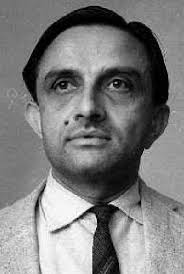
Vikram Sarabhai
Vikram Sarabhai was one of the greatest scientists of India. He is considered as the Father of the Indian space program. Apart from being a scientist, he was a rare combination of an innovator, industrialist and visionary. 
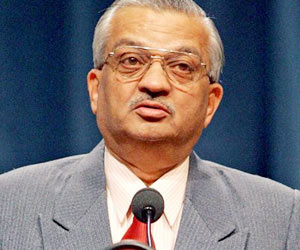
Anil Kakodkar
Anil Kakodkar
Dr Anil Kakodkar is a very distinguished nuclear scientist of India. He is presently the chairman of the Atomic Energy Commission of India (AECI) as well as the Secretary to the Government of India, Department of Atomic Energy.
APJ Abdul Kalam
Apart from being a notable scientist and engineer, Dr APJ Abdul Kalam served as the 11th President of India from the period 2002 to 2007. He is a man of vision, who is always full of ideas aimed at the development of the country and is also often also referred to as the Missile Man of India.
Birbal Sahni
Birbal Sahni was a renowned paleobotanist of India, who studied the fossils of the Indian subcontinent. Also a great geologist, Sahni is credited for establishing the Birbal Sahni Institute of Palaeobotany at Lucknow in the state of Uttar Pradesh. Born on 14 November in the year 1891 at Behra in the Saharanpur District of West Punjab, Birbal was the third son of Ishwar Devi and Prof. 
Srinivasa Ramanujan
Srinivasa Ramanujan was a mathematician par excellence. He is widely believed to be the greatest mathematician of the 20th Century. Srinivasa Ramanujan made significant contribution to the analytical theory of numbers and worked on elliptic functions, continued fractions, and infinite series.
Dr. Shanti Swarup Bhatnagar
Dr Shanti Swaroop Bhatnagar was a distinguished Indian scientist. He was born on 21 February 1894 at Shahpur, which is located in Pakistan in present times. His father passed away sometime after the birth of Shanti Swarup Bhatnagar. As such, he spent his childhood days with his maternal grandfather who was an engineer and it was here that he developed an interest in science and engineering.
Har Gobind Khorana
Har Gobind Khorana is an American molecular biologist born on 9 January 1922 to an Indian Punjabi couple. For his work on the interpretation of the genetic code and its function in protein synthesis, he was awarded the Nobel Prize in the year 1968.
Raja Ramanna
Handpicked by the founder of India's nuclear program, Dr. Homi Bhabha, Dr. Raja Ramanna was a celebrated physicist and nuclear scientist that India had ever produced. A multifaceted personality, Dr. Raja Ramanna played the roles of a technologist, nuclear physicist, administrator, leader, musician, Sanskrit literature scholar, and philosophy researcher.
Ganapathi Thanikaimoni
Ganapathi Thanikaimoni, a successful botanist of his days, is remembered till date for his widespread contribution in the field of palynology. His researches and projects not only helped India to make its presence felt on the world stage of botany, it also furthered public relations between two countries.
Harish-Chandra
For those who quiver at the thought of calculations and numerical deductions, unless when counting money, mathematics can be the equivalent of hell on earth. And for such 'math atheists' a mathematician like Harish Chandra can very well seem like a mirage. Harish Chandra is one amongst those few people who often 
G. N. Ramachandran
Gopalasamudram Narayana Iyer Ramachandran, popularly referred to as G. N. Ramachandran surely must be included in the list of one of the best scientists that 20th century India had produced. The best known work of G. N. Ramachandran till date is the Ramachandran plot, which the scientist had conceived along with Viswanathan Sasisekharan, to understand the structure of peptides.
Prasanta Chandra Mahalanobis
Economic census, population census, agricultural surveys and various other large scale and in depth samples and surveys that have been admired the world over for their scope and accuracy owes its popularity and worldwide acceptance to the grit, determination and genius of one man, Prasanta Chandra Mahalanobis.
Kotcherlakota Rangadhama Rao
Kotcherlakota Rangadhama Rao was one of the greatest physicists of 20th century India. His work in spectroscopy led to the development of the Nuclear Quadrupole Resonance in Physics. Kotcherlakota Rangadhama Rao is also known for his long association with the Andhra University in which he served as professor of Physics and subsequently,
Salim Ali
Almost every one of us is interested in watching colorful and distinct birds crossing us. But very few are passionate about studying them in detail. One such man who took extreme interest and excitement in studying birds closely and categorizing them was Dr. Salim Ali. One of the greatest biologists of all times,
Yellapragada Subbarao
"You've probably never heard of Dr. Yellapragada Subba Rao, yet because he lived you may be well and alive today; because he lived you may live longer". A famous adage quoted by American author, Doron K. Antrim, Yellapragada Subbarao was one of those rare people who made several significant contributions,
Sam Pitroda
Satyanarayan Gangaram Pitroda is a famous Indian and a renowned inventor, entrepreneur and policymaker who currently serves as an advisor to the Prime Minister of India, Mr. Manmohan Singh. His work revolves around Public Information Infrastructure & Innovations. He is respected for being a technological intellect 
Venkataraman Ramakrishnan
Indian born American, Venkataraman Ramakrishnan is a senior scientist in the Structural Division at the Medical Research Council Laboratory of Molecular Biology, in Cambridge, England. This great scholar has worked in various fields of biology during the earlier part of his career. However, Venkat along with Thomas A

read more

THE GREAT NATION - INDIA

0 comments

THE GREAT NATION - INDIA

The official Sanskrit name for India is Bharat.
INDIA has been called Bharat even in Satya yuga 
( Golden Age )
More INTERESTING FACTS ABOUT India

  • The name `India’ is derived from the River Indus, the valleys around which were the home of the early settlers. The Aryan worshippers referred to the river Indus as the Sindhu.
  • The Persian invaders converted it into Hindu. The name `Hindustan’ combines Sindhu and Hindu and thus refers to the land of the Hindus.
  • The number system was invented by India. Aryabhatta was the scientist who invented the digit zero.
  • Sanskrit is considered as the mother of all higher languages. This is because it is the most precise, and therefore suitable language for computer software. ( a report in Forbes magazine, July 1987 ).
  • Chess was invented in India.
  • Algebra, Trigonometry and Calculus are studies which originated in India.
  • The' place value system' and the 'decimal system' were developed in 100 BC in India.
  • The first six  Mogul Emperor's of India ruled in an unbroken succession from father to son for two hundred years, from 1526 to 1707.
  • The World's First Granite Temple is the Brihadeswara temple at Tanjavur in Tamil Nadu. The shikhara is made from a single ' 80-tonne ' piece of granite. Also, this magnificient temple was built in just five years, (between 1004 AD and 1009 AD)  during the reign of Rajaraja Chola
  • India is.......the Largest democracy in the world, the 6th largest country in the world AND one of the most ancient and living civilizations (at least 10, 000 years old). 
  • The game of snakes & ladders was created by the 13th century poet saint Gyandev. It was originally called  'Mokshapat.' The ladders in the game represented virtues and the snakes indicated vices. The game was played with cowrie shells and dices. Later through time,  the game underwent several modifications but the meaning is the same i.e good deeds take us to heaven and evil to a cycle of re-births.
  • The world's highest cricket ground is in Chail, Himachal Pradesh. Built in 1893 after levelling a hilltop, this cricket pitch is 2444 meters above sea level. 
  • India has the most post offices in the world !
  • The largest employer in the world is the Indian railway system, employing over a million people !.   
  • The World's first university was established in Takshila in 700 BC. More than 10,500 students from all over the world studied more than 60 subjects. The University of Nalanda built in the 4th century was one of the greatest achievements of ancient India in the field of education.
  • Ayurveda is the earliest school of medicine known to mankind. The father of medicine, Charaka, consolidated Ayurveda 2500 years ago.
  • Although modern images & descriptions of India often show poverty, India was one of the richest countries till the time of British in the early 17th Century. Christopher Columbus was attracted by India's wealth and was looking for route to India when he discovered America by mistake.
  • The art of Navigation & Navigating was born in the river Sindh 6000 over years ago. The very word 'Navigation' is derived from the Sanskrit word NAVGATIH. The word navy is also derived from the Sanskrit word 'Nou'.
  • Bhaskaracharya rightly calculated the time taken by the earth to orbit the sun hundreds of years before the astronomer Smart. His calculations was - Time taken by earth to orbit the sun: ( 5th century ) 365.258756484 days.
  • The value of "pi" was first calculated by the Indian Mathematician Budhayana, and he explained the concept of what is known as the Pythagorean Theorem. He discovered this in the 6th century, which was long before the European mathematicians.
  • Algebra, trigonometry and calculus also orignated from India.  Quadratic equations were used by Sridharacharya in the 11th century. The largest numbers the Greeks and the Romans used were 106 whereas Hindus used numbers as big as 10*53 ( i.e 10 to the power of 53 ) with specific names as early as 5000 B.C.  during the Vedic period.  Even today, the largest used number is Tera: 10*12( 10 to the power of 12 ).
  •  Until 1896, India was the only source for diamonds to the world. ( Source . Gemological Institute of America )
  • The Baily Bridge is the highest bridge in the world. It is located in the Ladakh valley between the Dras and Suru rivers in the Himalayan mountains. It was built by the Indian Army in August 1982.
  • Sushruta is regarded as the father of surgery. Over  2600 years ago Sushrata & his team  conducted complicated surgeries like  cataract, artificial limbs, cesareans, fractures, urinary stones and also plastic surgery and brain surgeries.
  • Usage of anesthesia was well known in ancient India medicine. Detailed knowledge of anatomy, embryology, digestion, metabolism,  physiology, etiology, genetics and immunity is also found in many ancient Indian texts.

read more
 

Followers